Showing posts with label Jane Austen. Show all posts

Friday, April 29, 2022

Gift for a Fairy Yarnmother

Over a year ago, a reader contacted me with a question -- she was downsizing her yarn collection, and would I like some of her stash? Shortly after, a box arrived on my doorstep. And then another, and then a third! Each one filled with beautiful yarns in some of my favorite fibers and a rainbow of colors. So many sock yarns! There were even a few cuts of fabric and a puzzle (how did she know?). I dubbed her my "Fairy Yarn-mother," and the name stuck (I don't know how she would feel about that, but hopefully she'd consider it a compliment!). You've already seen some of the results of her kindness, like Rosa's Izzy, my Elven Woods socks, and my Pinky socks. And there are more projects soon to be posted!


More crochet forays -- this time a bookmark, which was a challenging but enjoyable project.


In spite of my gratitude, 2021 was a difficult year in many ways, and it was over 12 months before I finally sent a little "thank you" package in her direction. It was also ridiculously hard for me to settle on what to send. Choosing gifts is not one of my strengths, and it's even harder when I have limited information about the recipient. But clearly sewing and knitting were something we had in common, and we also share a favorite Jane Austen novel! In the end, I went with those themes and hoped for the best.

A few lavender sachets in these Ruby Star Society "Purl" prints were a must:


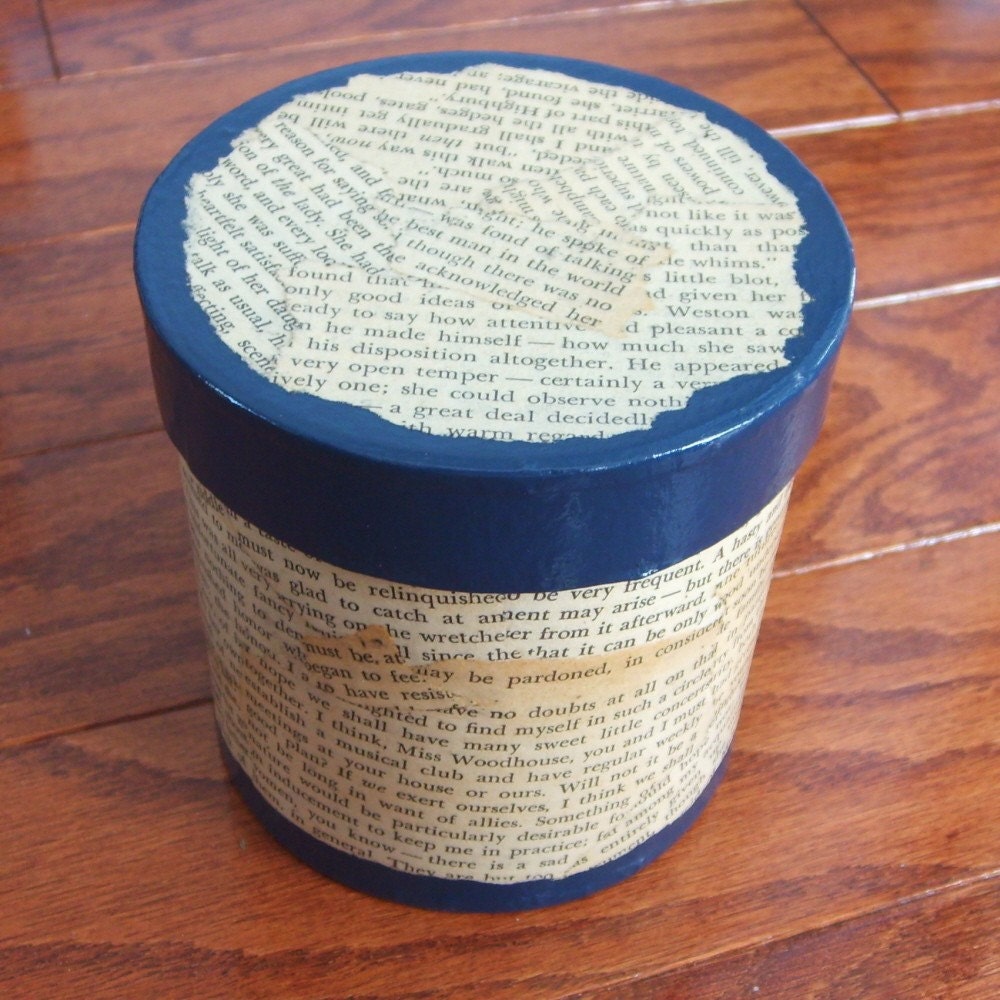
And I made a small box adorned with a facsimile of Jane Austen's manuscript for "Persuasion" -- I used to make these regularly for my Etsy shop once upon a time (though with fragments of thrifted novels), but haven't done one in ages. I forgot how much I enjoyed it! 


A few goodies completed the package, and off it went. I must say, it's making me itch to make Jane Austen wares again...
 

Saturday, August 01, 2020

Regency Reveries

When I first spotted the Fairfax reticule by Anne Gilmour, I knew I wanted to make one -- after all, it combines my love of Jane Austen and Regency fashion in one tidy little package (quite literally!). I snagged three skeins of Bremont Victoria in "mauve" for a fraction of the usual cost back in September and tucked them away. I though it would make the perfect gift for my kindred-spirit-of-a-sister.


It's a good thing I bought three skeins, because my yarn was so light that I had to hold it double! I ended up with very little left over, which suits me just fine. The alpaca/silk blend was lovely to work with, and I do love a good lace pattern (though a sneaky stitch marker shift half-way through did result in quite a bit of frogging on the second reticule -- you'd think I'd make fewer mistakes the second time around...).


The drawstrings were quite an adventure (each one has to be twisted 300 times, and I had four of them!), and I looked for several alternatives before just giving in and following the instructions.  


The lining also proved a bit of a challenge, probably due to variations in gauge and blocking. I ended up coming up with my own design to make it work -- basically a circle with four "darts." The lining is dupioni silk (which I've had in my stash for about a decade!).


I finished these up just in time to send one to my sister for her birthday! I have so many fond "Jane Austen" memories with her, from reading novels to watching movies to visiting Jane's home and haunts -- excuse my while I reminisce...


Jane's garden at Chawton, 2007


Lyme Regis, 2007


PS -- I realized I have a bit of a backlog of knitting projects to post, so expect a few more posts in the near future.


Monday, October 05, 2015

A Jane Austen Christmas: Review and Giveaway!

When a representative from Cider Mill Press approached me a few months ago asking if I'd like to host a review and book giveaway for a new Jane Austen book, my heart skipped a beat! Knowing that many of you share my love for Jane Austen, I didn't hesitate to send an affirmative response. I received my own copy of the book a little while back, and without further ado, will share my observations with you! If you'd like your own copy, have a try at the giveaway (below), or find it at Amazon here!


A Jane Austen Christmas: 
Celebrating the Season of Romance, 
Ribbons, & Mistletoe 

by Carlo DeVito


First off -- not to judge a book by its cover -- but this is a lovely little book! Bound attractively in red and green (you can see it peeking out in the photo), and jacketed festively, it's a well made book that's the perfect size for reading.

It's difficult to classify this book. It includes a bit of biography, a bit of historical info, and even recipes (mostly for festive holiday beverages, some of which are from the Austens themselves). Mr. DeVito tracks the Austens through the years, writing primarily about their Christmas-time activities. Each chapter/part focuses on a different year, starting in 1786.

One of my favorite aspects of the book was the connections between Jane Austen's experiences and the people she knew, and specific passages in her books. The infamous play from Mansfield Park? Jane had a similar experience when her own brothers vied for a young woman's attention during their own theatrics. Mr. Collins shows up, too, and Jane's unfortunate early romance with Tom Lefroy is detailed, as well as her exceedingly brief engagement to Harris Bigg-Wither.

DeVito draws from a variety of sources -- historical accounts, Austen family letters, etc. -- to paint a portrait of Christmas festivities in the Georgian and Regency eras. The bibliography is quite hefty for such a small tome. Including so many sources can result in a very choppy, cobbled narrative, but Mr. DeVito handled it quite well and the result is an easy read. Since I personally know very little about Christmas celebrations from that era of history, I found it quite informative! I also appreciated that he "suggested" how the Austens might have done things based on the traditions of the times, since we don't have exact accounts of all of their holiday activities.

As I mentioned, the book includes several recipes of the time period (mostly for alcoholic beverages, which is a bit of a specialty for the author), and gives some insight into how the Austens ran their kitchen -- Jane and Cassandra were actually quite involved, owing to their family's constrained finances. A Jane Austen Christmas certainly gave me a better sense of the time in which Jane Austen lived, especially the societal climate that influenced her books.

My only caveats with this book are relatively minor -- first, that a handful of grammatical errors were overlooked. None were very glaring, but it does make me wince to see such errors in print! The second, is that there are a few brief thematic elements that make the book suitable for slightly older audiences. There is nothing "very shocking," but I don't think I would have given this to myself at 12 (which is when I first started reading Jane Austen). Then again, I would most certainly be considered a prude by modern standards, so don't think that there is anything racy!

I felt that the book painted a pleasing vignette of Jane Austen's life, detailing some of the experiences that most shaped her development as an author. This is really the perfect book for a chilly afternoon by the fire, with a steaming cup of tea at one's elbow.


And now, for the giveaway! Cider Mill Press has generously offered to give a copy of A Jane Austen Christmas  to a "Thoughts and Thimbles" reader! Let's keep this simple, shall we? No liking, no following -- just leave a comment with your favorite Jane Austen novel, and enter the giveaway by clicking below!


The giveaway is open only to residents of the United States and Canada


The giveaway is now closed! Congratulations Hannah H!


a Rafflecopter giveaway


All opinions expressed in this review are my own -- I did receive a complimentary copy of A Jane Austen Christmas for the purpose of this review. Consider yourself informed! *wink*


Tuesday, April 06, 2010

Random Tuesday Musings


The author of the blog "Wit Behind the Ears" posted about one of my Austentations journals, which she won in a giveaway over at Opening Lines -- you can read about it here!


In other Etsy news, there are two new Pride and Prejudice journals in the Austentations shop, and a reversible scallop apron in the Oh Sew Delightful shop!


After a slew of custom orders, I'm finally sewing something for myself! I pulled out one of my vintage patterns today, took a deep breath, and started cutting. So far so good -- if all goes well, I'll be adding a little bit of 50's flair to my summer wardrobe.

Not that I'm in any hurry to get to Summer! This Spring is too beautiful for words; lazy bumblebees hovering outside our door, trees in full bloom, gardens profuse with color (and pollen!). Life is blessed.

Saturday, December 05, 2009

A Winner is Announced!


Well, the Austentations giveaway has officially closed. Thank you to everyone who participated! There were 42 entrants and 52 entries. I've really had a blast with this, so I think I'll have to do more giveaways in the future!

Since this was a Jane Austen giveaway, I thought I needed an "entry receptacle" that looked appropriate. I thought this lovely copper teakettle, a wedding gift from some friends at church, was perfect:


A little stirring, a bit of shaking, and then the crucial moment:


And the winner is...


Alex! You can find her at Behind the Lens (check out the festive blog background!). So Alex, you can e-mail me your selection and address -- again, you can pick any notecard sampler in the shop, and you also have 15% off anything in the shop (no expiration date!).

And for a "consolation" prize, I'm offering 10% off any item from the shop to everyone else who entered the giveaway -- just e-mail or convo me so I can make the price adjustment on the item you want!

Thanks again for your kind participation!

Friday, November 27, 2009

An Austentatious Giveaway!


With the Christmas holiday coming up, I thought it was about time to host my first giveaway on my blog!


This may be the best Black Friday deal you can get -- after all, it's free! *wink*


So here's how it works:

I'm giving away a set of cards from my Austentations shop on Etsy. The winner gets to pick the set that they'd like! They'll also get 15% off a future purchase in the shop. Just leave a comment on this post to enter your name for the drawing!


If you'd like to have a second entry, you can try the Jane Austen quiz below and e-mail your answers to me at maidenoftheking@ymail.com (yes, it is "ymail"). If you get the questions correct, you'll get an extra entry!


The drawing will close on Friday, December 4th (one week from today).

Now on to the quiz!


~ Bonus Entry Quiz ~

(By the way, it's okay to "cheat" by looking up the answers! *wink*)

1. What are Jane Austen's birth and death years?

2. How many brothers did Jane Austen have?

3. What was the name of Jane's older sister?

4. What was the original title of Pride and Prejudice?

5. Which of Jane's novels is a satire on the Gothic novel?

6. Which city played an important role in Jane's life (it's also the place where her father died)?

7. In which town does Louisa Musgrove have her famous fall?

8. Mr. Darcy's estate of Pemberley is located in which county?

9. Which two novels were published posthumously?

10. In which town did Jane Austen die?


E-mail your answers to maidenoftheking@ymail.com


As I mentioned before, the winner will receive one set (six cards) of their choice from my Etsy shop, as well as 15% off anything in the store.


Thank you for entering!

Monday, November 23, 2009

Real Comfort


"There is nothing like staying at home for
real comfort."


~ Jane Austen, Emma ~


Many thanks to glamorous Maggy for graciously allowing me to take a snapshot of her. She owns a family that attends our church, and recently allowed me to come as "Substitute Servant" while her family was out of town. There's no doubt that this prissy feline is royalty -- she refuses to drink out of a waterbowl; instead she demurely dips a paw in and licks the water off to rehydrate herself!


Thursday, July 09, 2009

A Bit of Hubris and Hostility


I can see now why "l'aimable Jane" chose the letter "P" for her alliterated title -- "H" just doesn't have the same ring, does it? Well, literary considerations aside, I've added something new to my Austentations shop, for the Janeites among us:


You can see it in the shop!

Wednesday, February 25, 2009

Delicious


A new box for the shop sports a delicious raspberry color. I don't know about you, but that color makes me hungry!


I also had a bit of fun with some gold leaf enamel paint. The combination of pink, gold, and creamy foxed pages seems to give off warmth -- which is more than welcome on this chilly winter day! I hope Emma would approve.

See it here.

Wednesday, December 31, 2008

A Bit of Jane Austen to Close Out the Year


Here's something a bit different for the shop -- a mini Jane Austen box, measuring a diminutive four inches tall and swathed in snippets of Emma. Two more tinies coming soon!


See it in the shop!

And have a Happy New Year!

Wednesday, December 10, 2008

Persuasion: A Listener's Guide


I have no idea why we taped the 1995 Sony Classic Persuasion off the TV a few years ago, because it was long before I had any interest in Jane Austen, or even knew of the existence of the novel! But when I finally watched the movie at age 13, I fell in love with it -- and have only grown to love it more over the past seven years. I could rave endlessly about the beautiful filmography, stunning (and correct!) costumes, the use of "real" people as actors, the incredible music, and the top-notch acting. While I am very picky about adaptations, this is one film that I can watch without a qualm about any of the deviations they made from the plot (not that there are many!). Amanda Root can express more with her face in five seconds than many actors express in an entire film. Every time I watch the film, I catch some new nuance of expression -- not just from Anne, but from any of the perfectly-cast characters.

So the point of this post is to offer some consolation to all of the 1995 Sony Classic Persuasion fans out there who were devastated to find that there is no soundtrack! The reason that there is no soundtrack, as far as I can tell, is that Jeremy Sams only wrote three songs for the movie and used classical pieces for the rest. I first discovered this when listening to a CD of Chopin pieces, and recognized two from Persuasion!

So, several months ago I set out on a journey to find the pieces used in the film. Fortunately, I didn't have to travel far, since IMDB.com had all the information I needed! And, after far too much rambling on my part, here it is:

(all of these links go to Amazon.com, and are available as downloads)

Bach's French Suite No. 1 in D minor, BWV 812 -- No. 3, Sarabande

Bach's French Suite No. 3 in B minor, BWV 814 -- No. 3, Sarabande

Chopin's Nocturne No. 3 in B, Op. 9

Chopin's Prelude No. 3 in G Major, Op. 28 -- "Thou art so like a flower"

Chopin's Prelude No. 21 in B flat major, Op. 28 -- "Sunday"

I marvel at the compatability of Bach and Chopin for this movie -- who could have guessed that the essence of Baroque could blend so beautifully with the essence of Romanticism? And ironically, though neither style would have been in vogue in 1818 (Bach was out of fashion and Chopin was still a child), both styles fit the film perfectly. Every piece except the Chopin Prelude No. 3 are moody and poignant; every piece expresses a sense of loss and regret and beauty. And the few pieces that Jeremy Sams did compose blend in perfectly with the rest of the film, too, forming a beautiful musical soundtrack for a beautiful film. Not that I like this movie, or anything like that...

At any rate, I hope this will be a bit of a musical panacea for fellow Persuasion fans!

Monday, June 09, 2008

Lessons in Love from Jane Austen


The outbreak of new Jane Austen adaptations on Masterpiece Classic has made me contemplate her body of work as a whole. I felt a general distaste (amounting sometimes to severe frustration) for the adaptations, but I also felt that I needed reasons to back up my opinions. My reflections on this topic broadened when I realized that, as products of contemporary society, the new adaptations reflected modern ideas not only about Jane Austen’s work, but about life and romance in general.

So what does modern society say about romance? Romance is stars and butterflies, a kind of fluttery feeling in the pit of your stomach. It is unreasoning and inescapable (in a fatalistic sort of way). True romance is finding your “soul-mate.” A soul-mate is a nebulous concept, but it usually refers to someone who makes you feel like you’re the most important person in the world. If these starry-eyed emotions disappear, it means that you are no longer in love.

Good reasons to leave a relationship include:
A) not “getting anything” out of your current relationship
B) finding someone who is better-looking
C) finding someone who produces stronger fluttery feelings in the area around your liver (or is it your small intestine?)
D) finding someone who is more romantic
E) finding someone who has better taste in jewelry
F) all of the above.

Hollywood mass produces these ideas in every possible shape and form and feeds them to hordes of movie-goers every year. This over-emphasis on romantic feelings has done little for our society except cause dissatisfaction in singles – not to mention those who are married and past the “fluttery” stage of their relationships.

But what does Jane Austen have to say about love in her novels? As I started thinking about her novels, I realized that there is hardly an ounce of what people today call romance. Wait a minute! Pride and Prejudice is the most romantic book of all time! Isn’t it?

First I think it’s important to look at each hero and heroine, analyzing their feelings and their reasons for marriage. Since Pride and Prejudice is the most famous, it’s a good place to start.

Pride and Prejudice

Mr. Darcy: Admittedly, Mr. Darcy has some elements of romance in his nature. He overcomes family pride, financial considerations, and what he considers “prudence” in asking Elizabeth Bennett to marry him. Surely this would seem to involve the “unreasoning” aspect of romance. But why has he asked Lizzie to marry him? There are plenty of eligible young women throwing themselves at his head (most notably, Miss Bingley). However, he is drawn to Lizzie because of her wit, intelligence, and good sense. True, she is pretty. But if looks were the deciding factor in his affection, he might easily have chosen another woman. By the time he proposes for the second time, his respect for Lizzie has only grown (his deflated vanity helps, too). He would never have overcome his scruples about marrying her if he had thought her unworthy of his love. In other words, he respects her.

Lizzie: Why does Elizabeth Bennett change her mind and decide to marry Mr. Darcy? Because she finally understands and respects his character. She cannot be said to base her decision on looks, wealth, or position – he offered them to her once without avail. It would be equally ridiculous to say that she just “falls in love” with him or “can’t resist” him. No, Lizzie marries Mr. Darcy when she is sure that he is a man of strong principle, a man that she can respect. Lizzie does dabble in a “romantic” relationship with Wickham, but Jane Austen shows this as a disaster of poor judgment (combined with Wickham’s deceit) rather than a romantic triumph. Lizzie’s ultimate choice is based on respect.


Sense and Sensibility

Edward and Elinor: This can hardly be said to be a “romantic” relationship in the modern sense of the word. Both Edward and Elinor are quiet, unassuming people without great personal beauty or charm. They are attractive to each other because their minds are similar, but they do not hold great attractions for the rest of the world. Edward rashly engaged himself to Lucy Steele in his youth, an imprudent romance that threatens his happiness. However, both he and Elinor would prefer his honorable union to Lucy to a dishonorable breach of contract so that they could marry each other. Even their love and respect for each other is limited by the demands of honor and virtue. Of course, this assumes that engagements were serious and binding – a concept that is foreign in today’s world. What is the result of this unpromising union? They settle down comfortably at a small parish and live out the remainder of their life together. Here is what Jane Austen herself records about his proposal to Elinor:

“When they all sat down to table at four o’clock, about three hours after his arrival, he had secured his lady, engaged her mother’s consent, and was not only in the rapturous profession of the lover, but in the reality of reason and truth, one of the happiest of men.” – Chapter 49

Note the words “reason” and “truth.” While Jane Austen does not pretend that Edward does not feel any emotion, his romantic choice is no mere whim. After their marriage, Edward and Elinor receive a visit from Mrs. Jennings, who:

“found in Elinor and her husband, as she really believed, one of the happiest couple in the world. They had in fact nothing to wish for, but the marriage of Colonel Brandon and Marianne, and rather better pasturage for their cows.” – Chapter 50

Is better pasturage for cows a subject which makes the heart flutter? Not the Hollywood version of it, certainly, but it is the type of romance which will last them for the rest of their lives: mutual affection and respect, coupled with common interests and pursuits.


Marianne and Colonel Brandon: A girl of seventeen marrying a man of thirty-six is hardly romantic by modern standards. It is even questionable whether Colonel Brandon really loves Marianne for herself, or because she reminds him so strongly of his dear Eliza. Marianne accepts Colonel Brandon’s attentions – formerly rejected because of his “advanced years” and general lack of dash and swagger – after she’s reduced by illness and on the rebound from a prolonged and painful romance with Willoughby. In Chapter 50, Jane writes of Marianne’s decision to marry and Colonel Brandon’s flannel waistcoat in the same paragraph. So are they doomed to a life of unhappiness and regrets? Hardly. Their mutual respect gradually grows into a deeper affection that will endure the test of time. As Jane Austen records, Marianne had the type of disposition which ultimately led to her falling very much in love with her husband.


Persuasion

Captain Wentworth and Anne Elliot: Persuasion has more to say about constancy of affection than the forming of it. But returning after eight years with some bitterness still lingering in his heart, Captain Wentworth prefers the faded, sensible, and truly good woman he once loved to Louisa Musgrove’s beauty, youth, and exuberance. If he had based his decision on any of the things that Hollywood considers important, Louisa would have been his choice. But it is Anne who is suited to his temperament, and it is Anne who has earned his respect. Louisa is a flighty young girl who is headstrong in her behavior, while Anne is a mature woman who puts others before herself and thinks and feels deeply. Captain Wentworth has the wisdom to see this, even though he is hampered by bitterness early in the novel. Anne, likewise, never wavers in her affection. Captain Benwick, on the other hand, is overwhelmed by emotion – and then marries a year after the death of his “beloved” Phoebe. Persuasion is a powerful reminder that true affection is often a quiet, gentle emotion.


Mansfield Park

Edmund Bertram and Fanny Price: I am convinced that one of the reasons most people do not like Mansfield Park is that the ending is impossibly unromantic. Edmund spends the first few hundred pages of the book throwing away his affection on a woman who is utterly unworthy of it, and then transfers his affection to his cousin once he realizes his mistake. But what if we evaluate the novel by modern standards? If he truly was in love with Mary Crawford, certainly she was his soul-mate, right? The problem is that he never was in love with Mary Crawford. He was in love with an idea of her that he had created himself. He attributed Fanny’s sweetness, goodness, and piety to Mary’s pretty face and clever mind. Ultimately, he chooses goodness over beauty and wit. Once more, Jane Austen shows that inclination – “infatuation,” as she calls it in Chapter 48 – is never enough to base a marriage on. To marry Mary, Edmund would have had to deny the very principles that made him who he was. Fanny is the woman who complements his temperament and encourages him to follow good principles. So what happens when two people mutually in love marry and settle down? Jane Austen tells us:

“With so much true merit and true love, and no want of fortune and friends, the happiness of the married cousins must appear as secure as earthly happiness can be.—Equally formed for domestic life, and attached to country pleasures, their home was the home of affection and comfort; and to complete the picture of good, the acquisition of Mansfield living by the death of Dr. Grant, occurred just after they had been married long enough to begin to want an increase of income, and feel their distance from the paternal abode an inconvenience.”

Stars and butterflies? No. Genuine, lasting happiness? Yes.


Northanger Abbey

Henry Tilney and Catherine Morland: Northanger Abbey is written as a satire, and as such it does not conform to the conventions of most novels. It is probably the least “romantic” of all of Jane Austen’s books, but it is simultaneously one of the most delightful. In her witty way, Jane Austen explains Henry’s attachment to Catherine:

“Though Henry was now sincerely attached to her—though he felt and delighted in all the excellencies of her character, and truly loved her society—I must confess that his affection originated in nothing better than gratitude; or, in other words, that a persuasion of her partiality for him had been the only cause of giving her a serious thought. It is a new circumstance in romance, I acknowledge, and dreadfully derogatory of a heroine’s dignity; but if it be as new in common life, the credit of a wild imagination will at least be all my own.”

Jane Austen knew full well that it is not a new circumstance in common life, whatever is written in novels. Henry and Catherine are consigned to a happy, ordinary life. They respect each other and get along well, and Jane Austen considers this as good a reason as any for them to live happily – indeed, a better reason! Theirs was not blind infatuation, but the reasoned affection that is based on knowledge of character and affinity of temperament.


Emma:

Mr. Knightley and Emma Woodhouse: What is there left to be said? Emma marries a man that she respects and honors, a man whom she has looked up to as long as she can remember. Mr. Knightley marries a woman that he has known since her infancy, a woman who – though not perfect – is perfectly suited to be his wife. They are comfortable with one another; there is no awkwardness and no pretence to mar their happiness. Mr. Knightley knows the worst of Emma, and loves her still because he also knows the best of her. Emma can trust Mr. Knightley to guide her and care for her – and she desperately needs someone to guide her willful temper. She owes her “reformation” to his interest in her welfare.


**********************************************************


So does Jane Austen does write romances? Yes! They do not fit into modern guidelines, but they are romances of the truest and best sort. The only characters in Austen novels who base their romantic decisions on their “emotions” end up unhappy (at least temporarily), or even in disgrace: Henry Crawford and Maria Bertram, Edmund Bertram and Mary Crawford, Marianne Dashwood and Willoughby, Lizzie Bennett and George Wickham, Lydia Bennett and George Wickham, Isabella Thorpe and James Morland, Edward Ferrars and Lucy Steele, and others.

The thread running through each of Jane’s novels is the theme of respect. It is not enough to be pretty, or charming, or wealthy, or agreeable. There must be goodness, good sense (though slips of judgment are inevitable), and character. That is the foundation of each successful romance in her novels, and it is the foundation of successful romances in real life, as well.

Hollywood tries to change this because it doesn’t think that anything other than a full-blown romance will sell. Hence, the 2005 version of Pride and Prejudice implies that there is some mystical attraction between Mr. Darcy and Lizzie, an attraction that is resisted in vain by both parties. They marry because “they can’t live without each other.” All I have to say to that is “Hogwash!” Jane Austen never indulged in such fatalistic flights of fancy. She knew that love was much more than an emotion, and that “romance” was not guaranteed to last.

It irks me to no end when I hear people call Jane Austen’s novels “romances,” or worse, “chic flicks!” Jane Austen wrote about life, and romance is a part of life. But if her novels were only concerned with the fluttering emotions of young lovers, they would never have stood the test of time. Instead, the prosaic romances of Emma Woodhouse and Elinor Dashwood have continued to delight readers throughout the centuries that followed their creation. They are timeless because they are real, and because the men they love are real. They are timeless because Jane Austen understood love, and, more importantly, understood human nature.